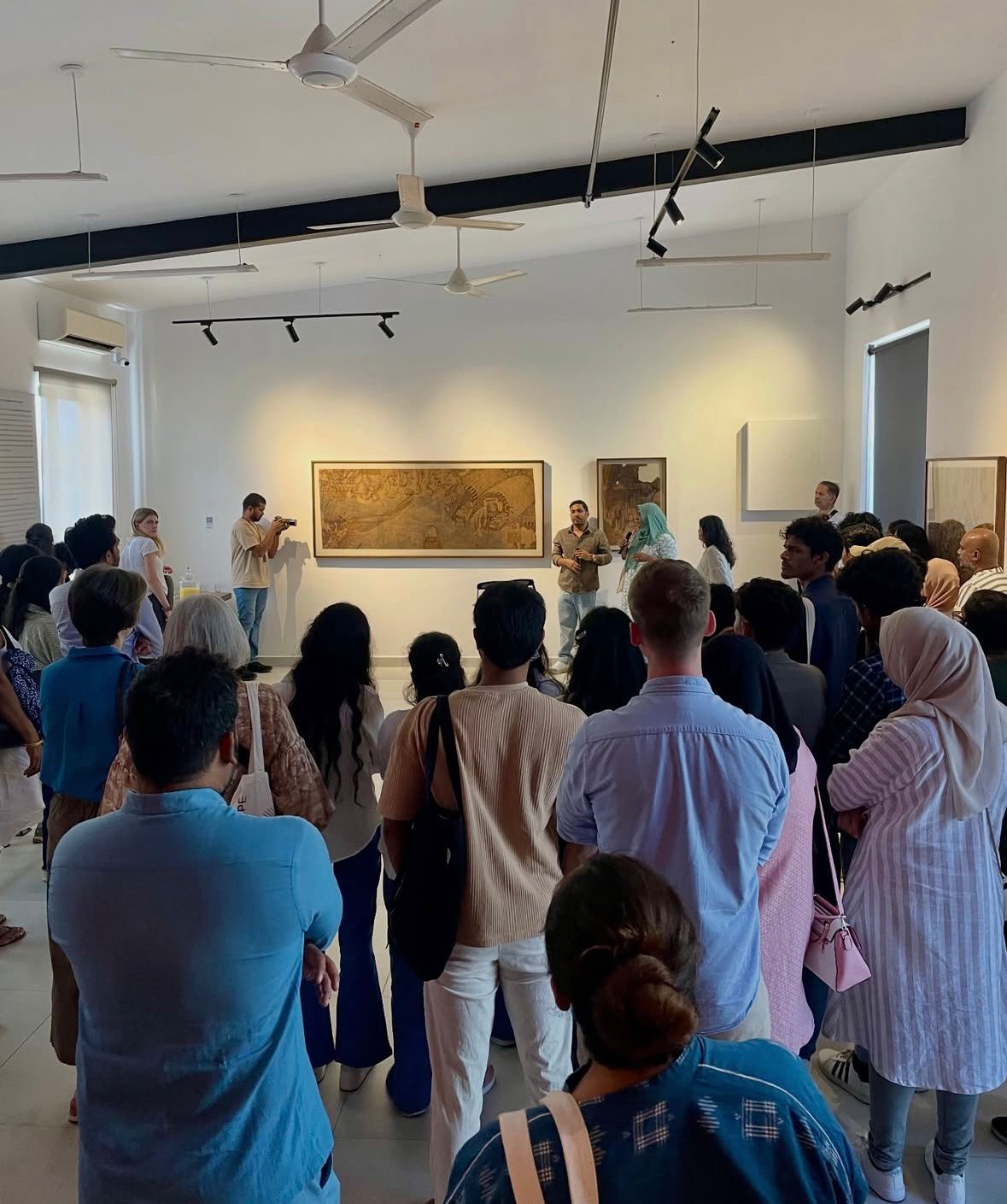

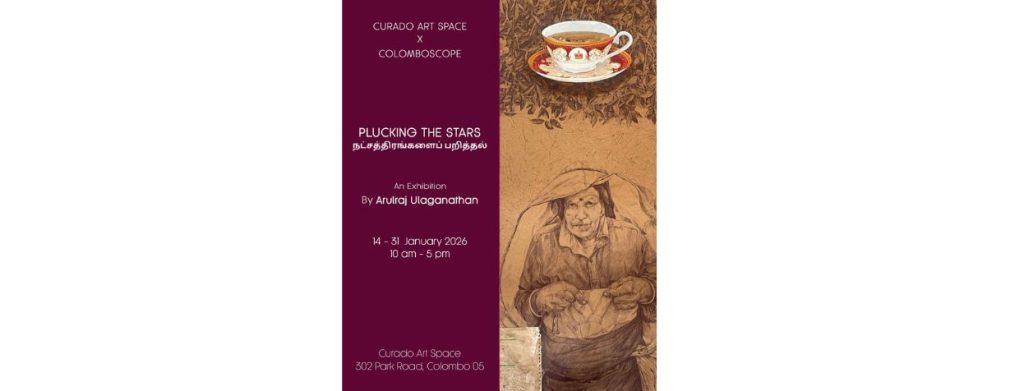
The collaboration between Colomboscope (a non-profit, non-commercial organization), and Curado Art Space, for their ninth edition in 2026, brings together two platforms committed to advancing contemporary Sri Lankan art through dialogue, experimentation, and accessibility.
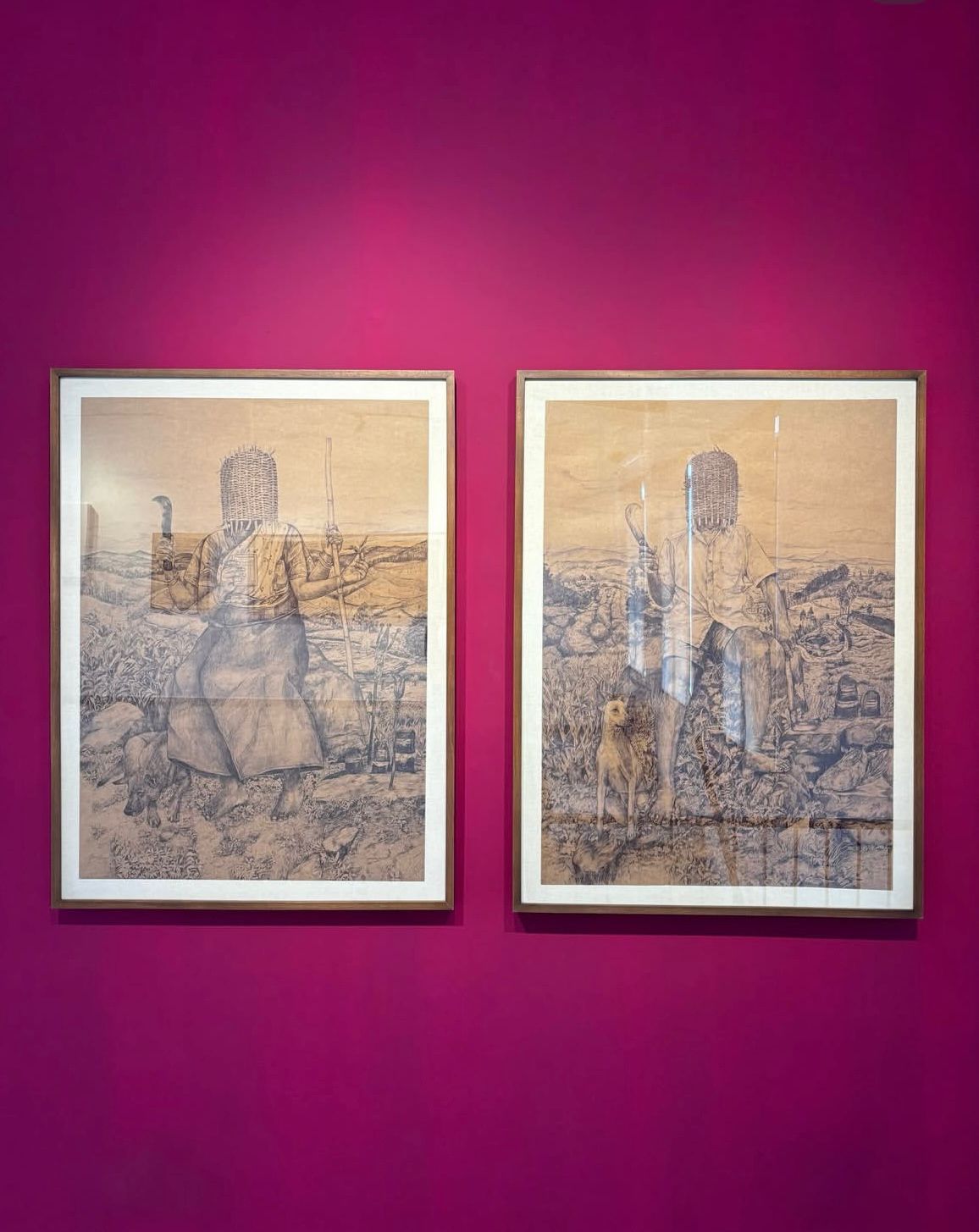
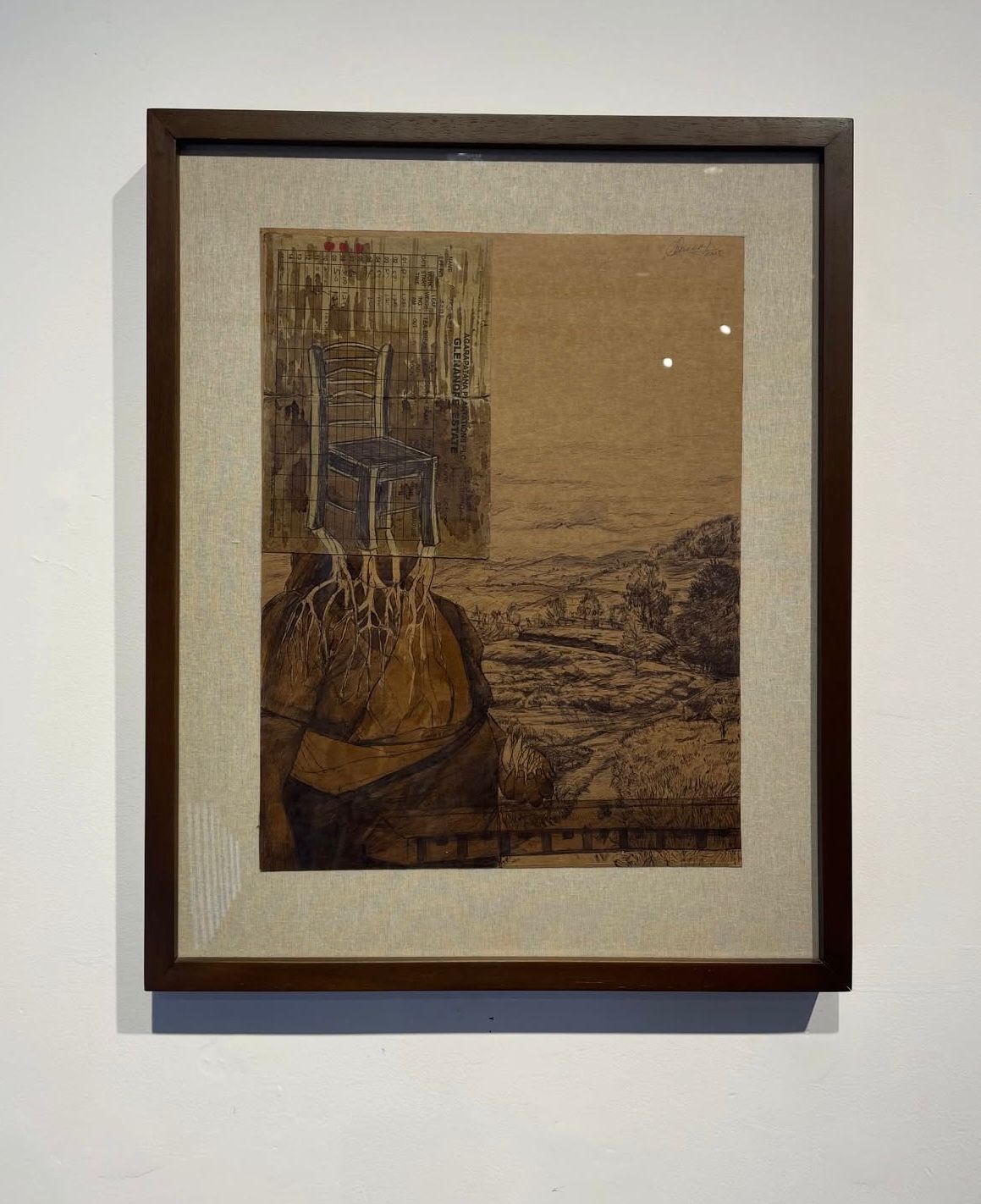
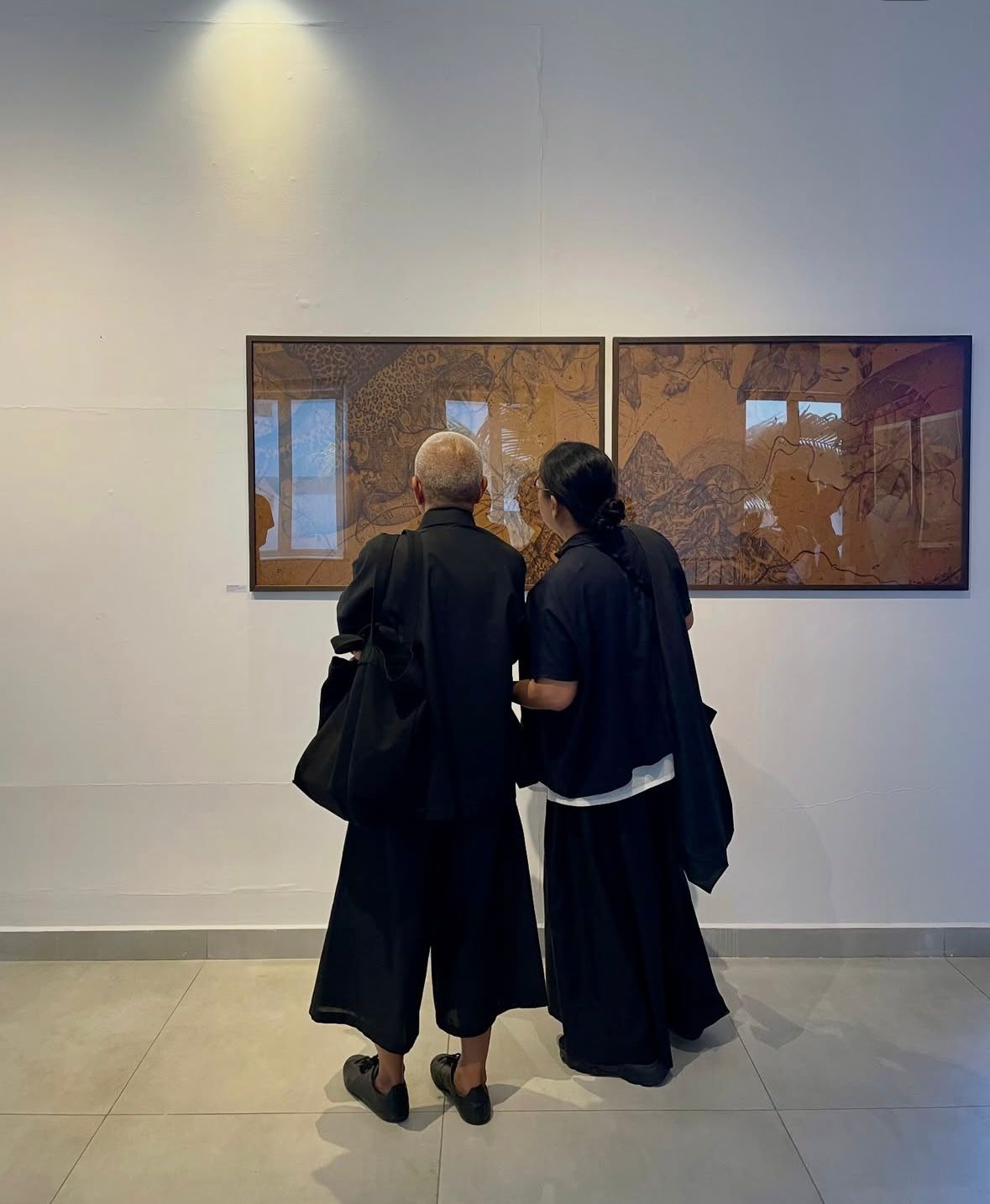
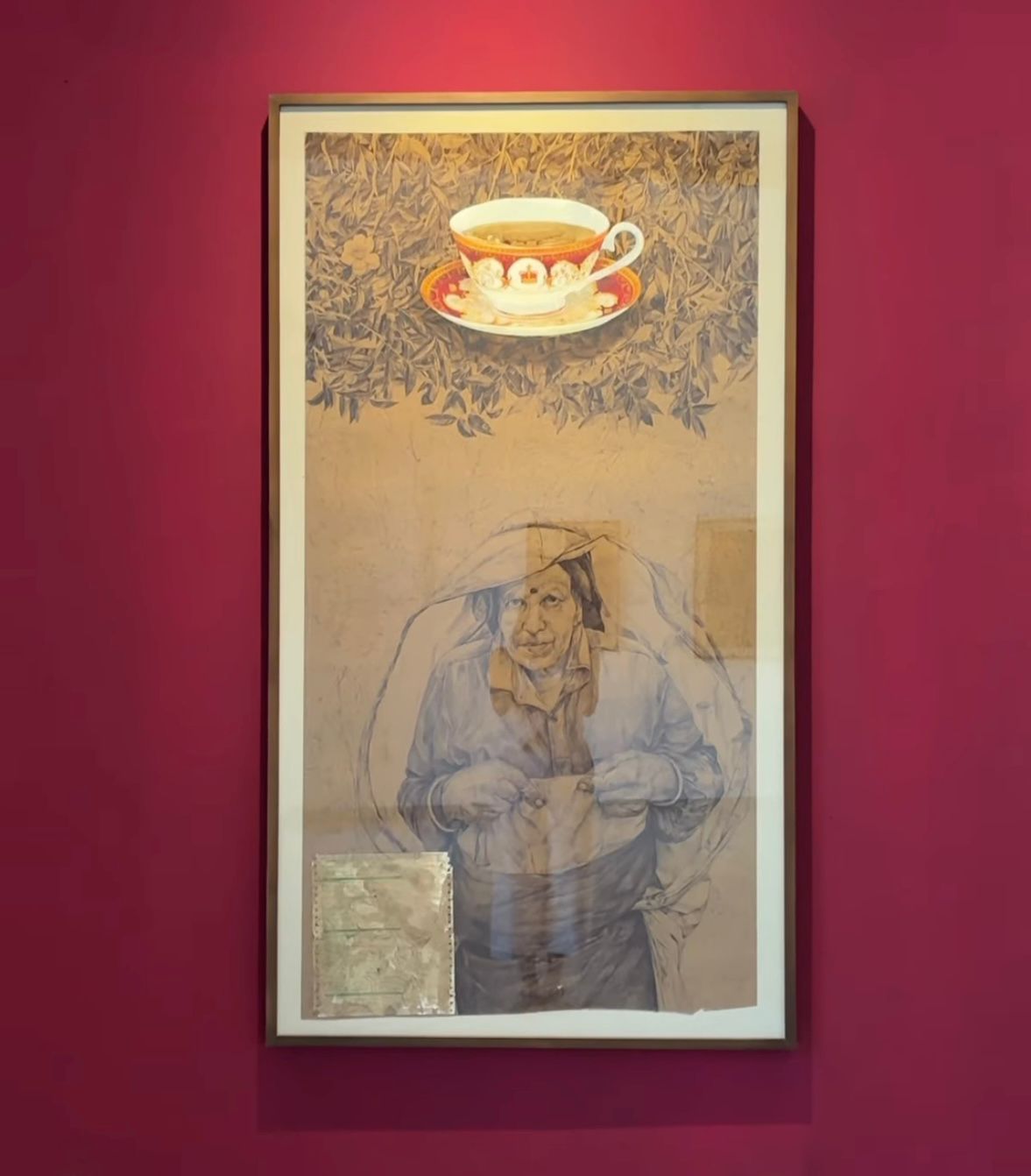
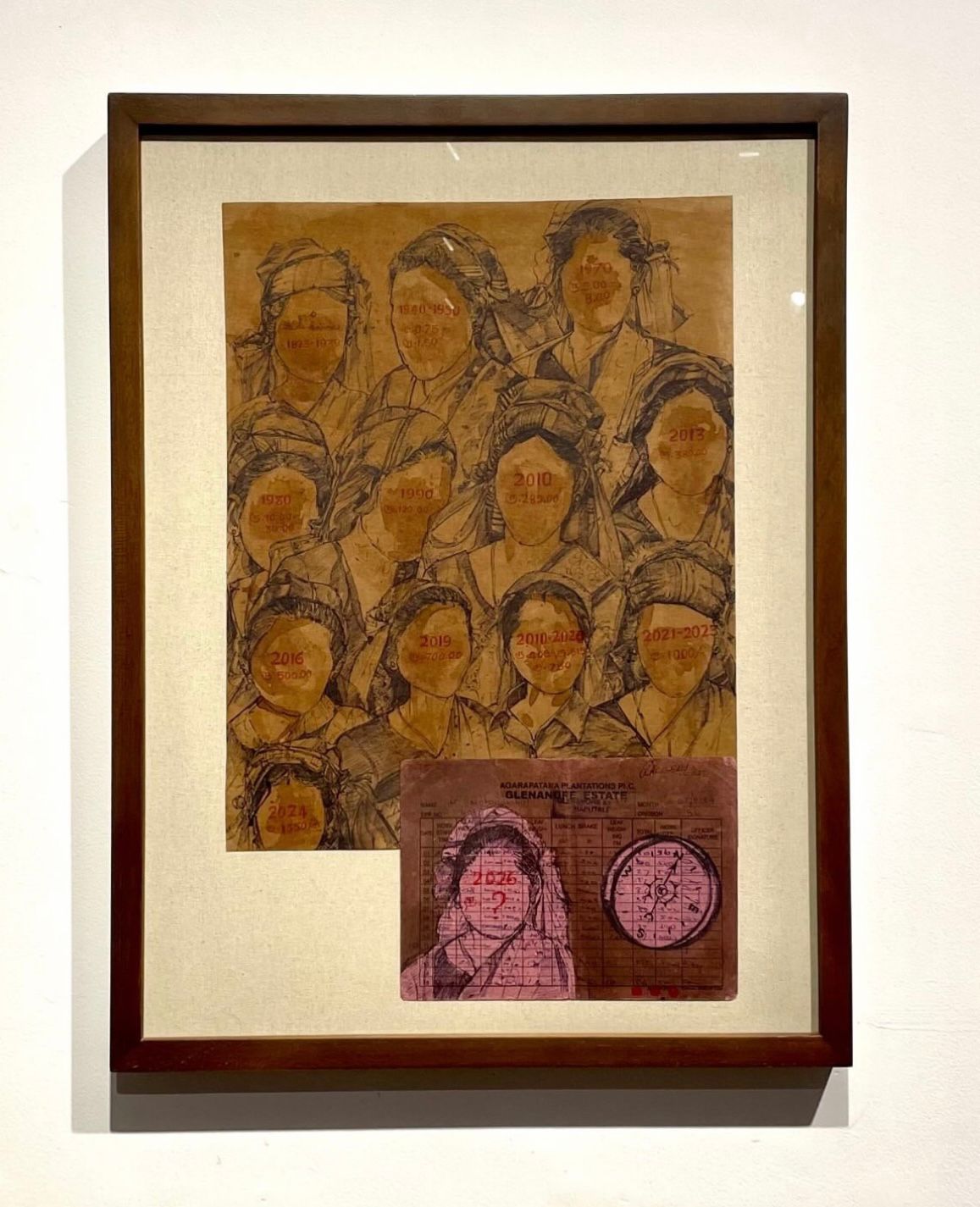
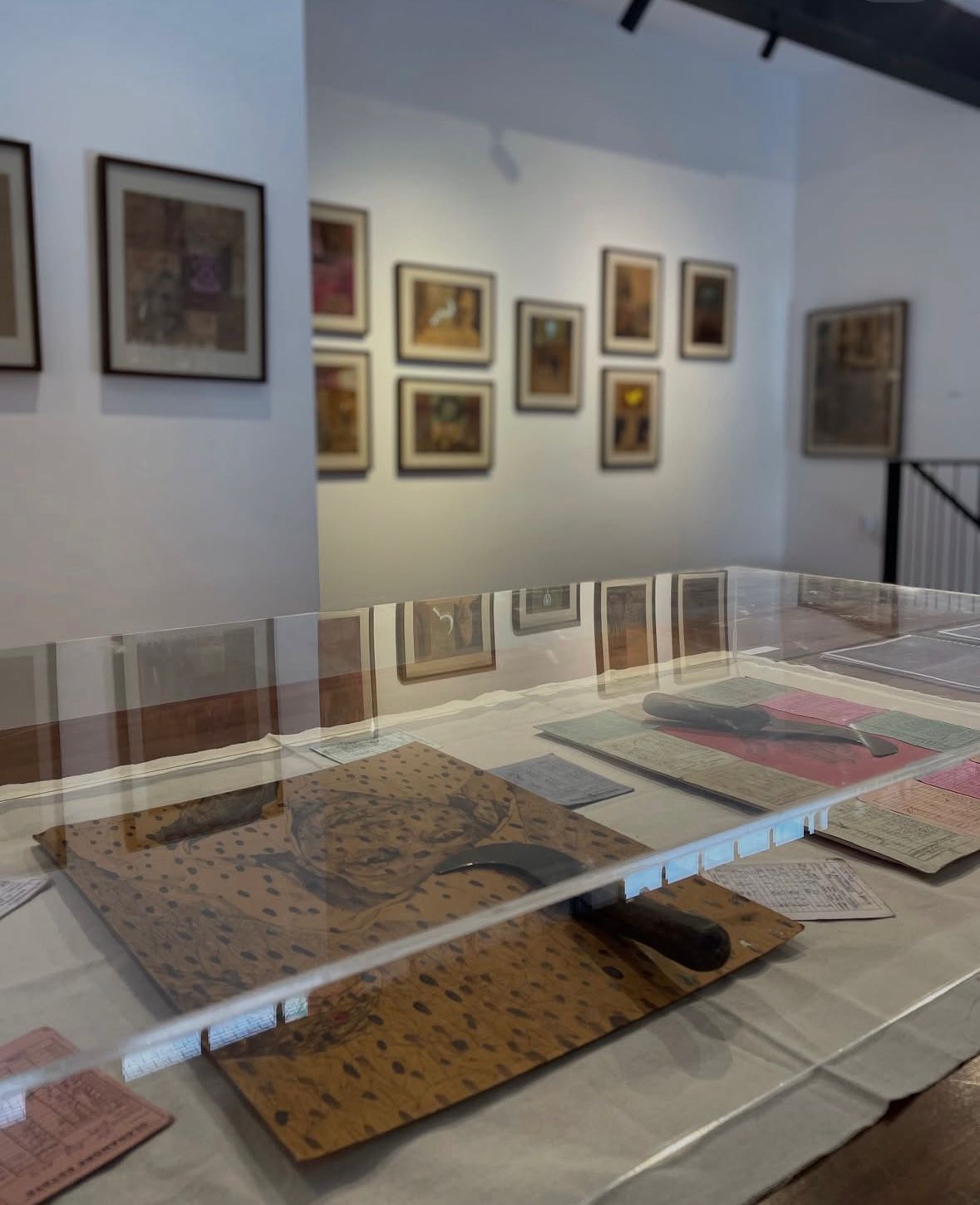
In his second solo exhibition Plucking the Stars நட்சத்திரங்களைப் பறித்தல் Arulraj Ulaganathan brings together new and ongoing series engaging with personal memory from childhood and spiritual cosmologies active within everyday life contours of Malaiyaha Tamils. Narratives of labour across tea plantations, and distinct stories unfold in the the hills of Haputale. Through dense and layered imagery, the artists’ compositions attest to restrictive domestic architectures as part of the Lineroom (Layan Kampura) series. Further, plotting the decimation of forests and the building of colonial railroads, Arulraj maps the flows of coloniality and mobilizes states of dreaming, dark irony, and witnessing.
Arulraj notes: “The backdrop, an imagined yet memory laden landscape of Haputale, merges past and present while revealing the political and spiritual impact of the colonial tea economy. This land becomes the stage where divinity and colonial power intersect, giving voice through my art to the silenced histories of the Malaiyaha.”
Works such as Lord of the Hills encapsulate scenes of regimented and circular time, the contrasting temporality of hierarchical and exploitative conditions of estate management and political neglect on one hand, and on the other illustrating modes of daily preservation, devotional protocols and liberatory politics that refute the burdens of migration and ecological dispossession.
The tea shoots, leaves, and bush are treated as material and symbolic capital networked into generational experience, forced movement, global trade and national power. Driven through emotional cartography, record keeping, and a surrealist space of drawing, Arulraj expands from his earlier series exhibited at the eighth edition of Colomboscope, Way of the Forest.
The artist engages communal perspectives through kin and neighbours, always centering Malaiyaha Tamil women as workers, mothers, and divine mediums. He visualizes historical and current encounters of uprooted belonging while asserting the enduring prowess of matriarchs, seasonal rituals surrounding the tea estates, and urgent communal quests as sovereign custodians of land.
Text: Natasha Ginwala, Colomboscope